
- Posted on
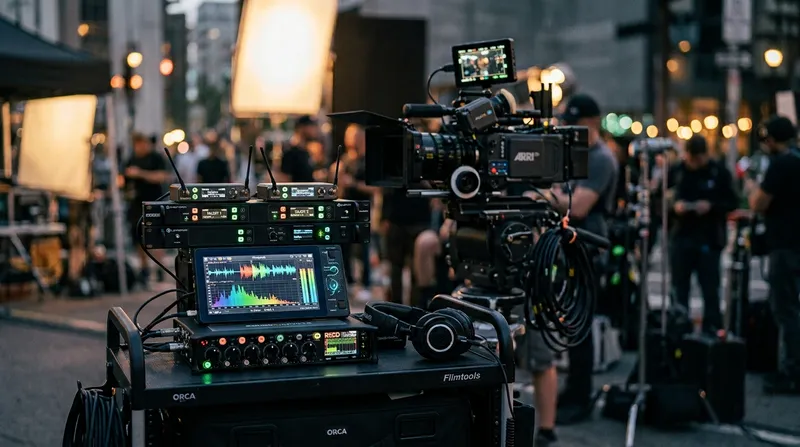
Industry Trends & Insights Q2 2026: The State of Professional Location Audio
The second quarter of 2026 has been a transformative period for location audio professionals. With evolving production workflows, emerging technologies, and shifting market dynamics, the demands placed on those capturing audio on set have never been more complex—or more critical to the final product.
This quarter's landscape is defined by several key trends that every location audio professional should understand.
1. AI-Assisted Dialogue Enhancement in Real-Time
Artificial intelligence tools that were once confined to post-production have begun making their way onto location. Q2 2026 saw increased adoption of real-time AI noise reduction, voice isolation, and automatic dialogue enhancement plugins integrated directly into wireless receiver systems and field recorders.
While purists argue that no amount of processing can replace a well-recorded, dry signal, the reality on set is different. Budget-conscious productions are increasingly requesting that audio teams provide AI-assisted "cleanup" passes as a value-add service. The savvy location mixer is now expected to deliver not just clean tracks, but production-ready dialogue tracks that require minimal post-production intervention.
The takeaway: Master your AI tools. They're not replacing you, but they're changing your deliverables.
2. The Rise of Immersive Audio Capture
With Dolby Atmos and other immersive audio formats moving from premium streaming content to mid-tier productions, the demand for object-based audio capture on location has grown significantly. This isn't just about Atmos for theatrical releases—it's about future-proofing content for whatever format consumers may adopt.
Wireless microphone systems now offer multichannel output capabilities, and newer field recorders can capture ambience and dialogue simultaneously in immersive configurations. Location teams are being asked to capture not just dialogue and basic ambience, but detailed soundstage information that will be used for immersive mixes.
This trend is particularly pronounced in: - Limited series and prestige television - Independent feature films targeting festival and streaming distribution - High-end corporate and documentary productions
3. Wireless Technology: 5G Integration and Extended Range
The rollout of 5G networks has begun to impact wireless audio gear in meaningful ways. Newer receiver systems are incorporating 5G capabilities for remote monitoring, file sharing, and even backup transmission paths. This means audio engineers can now: - Stream high-quality audio to off-site supervisors in real-time - Share takes and selects immediately for review - Maintain wireless communication with crew in environments where traditional RF may be congested
Additionally, interference management has become more sophisticated. Q2 2026 has seen widespread adoption of automated frequency coordination tools that analyze the RF environment and suggest optimal frequencies before you even leave base camp. The days of manually scanning for clear frequencies before every shoot are rapidly becoming a thing of the past.
4. Sustainability and Green Production Standards
Sustainability initiatives in film and television production have moved from aspirational goals to contractual requirements. Many production companies, particularly those tied to streaming platforms with environmental commitments, now require location audio departments to adhere to green production guidelines.
This has practical implications for Q2 2026 location work: - Battery management: Lithium-ion battery efficiency has improved, but many productions now mandate specific energy reporting and recyclable battery systems - Equipment longevity: Companies are investing more heavily in repairable, upgradeable gear rather than disposable equipment - Travel reduction: Remote location mixing and monitoring setups allow senior audio professionals to oversee multiple units or serve across locations without constant travel - Paperless workflows: Digital cable labeling, electronic script tracking, and digital call sheets are now standard expectations rather than nice-to-have conveniences
5. The "Hybrid" Location Model Continues to Grow
The post-pandemic production model has settled into a hybrid approach. While fully remote audio operations remain niche, the ability to mix on location while simultaneously serving multiple units or providing audio feeds to off-site post teams has become table stakes for larger productions.
This hybrid model has accelerated several trends: - Cloud-based collaboration: Location audio files are increasingly being uploaded to secure cloud platforms for immediate post-production access - Standardized metadata: There's a push toward universal metadata standards that make it easier to organize and locate audio files across productions - Remote troubleshooting: Technicians can now diagnose and sometimes fix issues with location gear remotely, reducing downtime on set
6. Talent Expectations and the "Content Creator" Economy
One of the most subtle but impactful trends in Q2 2026 is the changing expectations of on-camera talent regarding their own audio. Many performers now come to set with significant experience from content creation, social media production, or other digital media formats. This creates both challenges and opportunities:
Challenges: - Performers may expect "fix it in post" mentality even on professional productions - Some talent may resist certain audio capture methods they find uncomfortable (e.g., head-worn microphones) - Expectations around immediate audio review and playback
Opportunities: - Talent who understand audio are more cooperative and can provide better performances when they can hear themselves clearly - The "influencer" economy has created a new talent pool that values high production quality across all media - Cross-platform content creation often means audio teams capture content that will be repurposed for podcasts, social media, and other formats
7. Budget Pressures and the Quality Arms Race
Despite technological advancements, budget pressures remain a constant challenge in the industry. Streaming platforms have begun recalibrating their content investment strategies, leading to more competitive bidding and tighter budgets for many productions.
Yet audience expectations for audio quality continue to rise. Viewers are more sensitive to audio issues than ever before, particularly as high-fidelity home audio systems become more common. This creates a tension that location audio professionals must navigate:
- How to deliver high-quality audio on tighter budgets?
- How to justify the value of professional location audio to producers who don't understand its impact?
- How to maintain quality when equipment rentals are being reduced or when crew sizes are shrinking?
The answer, increasingly, lies in demonstrating ROI. Productions that understand the relationship between quality location audio and reduced post-production costs, faster turnaround times, and higher audience satisfaction are the ones winning the budget battles.
8. Education and Professional Development
Perhaps the most encouraging trend of Q2 2026 is the increased focus on education and professional development within the location audio community. With technology evolving so rapidly, professional organizations, equipment manufacturers, and experienced practitioners are offering more training opportunities than ever:
- Online workshops on immersive audio capture
- Manufacturer-sponsored training on new wireless systems
- Mentorship programs connecting experienced audio professionals with emerging talent
- Conferences and events focused specifically on the business aspects of location audio
The professionals who invest in continuous learning are the ones who will thrive in this changing landscape.
Looking Ahead
The second quarter of 2026 has been a period of both challenge and opportunity for location audio professionals. The technologies we use are more sophisticated than ever, the expectations placed on us are higher, and the stakes for getting audio right on location have never been greater.
But the fundamentals remain unchanged: great location audio starts with good communication, careful planning, and a commitment to capturing the best possible sound in whatever environment we find ourselves in. Technology can assist, but it cannot replace the expertise, intuition, and artistry of a skilled location audio professional.
The professionals who succeed in Q2 2026 and beyond will be those who embrace change while honoring the craft, who see technology as an enabler rather than a threat, and who understand that location audio isn't just about capturing sound—it's about capturing emotion, intent, and story.
What trends are you seeing in your work as a location audio professional? Share your insights in the comments below or connect with me directly.
👉 Home 👈
This post is part of a quarterly series on industry trends and insights for location audio professionals. Come Back to stay updated on future editions.
Sources
Audio Engineering Society (AES)
SMPTE - Society of Motion Picture and Television Engineers
MovieLabs - Emerging Technology