
- Posted on
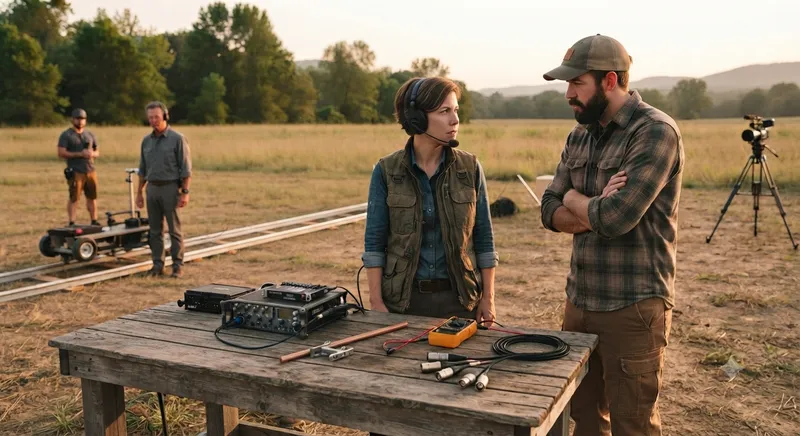
Field Noise Troubleshooting Quick Reference
| Noise Type | Primary Characteristics & Source | Typical Symptoms | Field Solutions |
|---|---|---|---|
| Hum (Ground Loops) | 50Hz/60Hz Tone caused by differences in ground potential between interconnected equipment. | • Audible hum through speakers • Hum increases when gear is touched • Video "hum bars" on displays |
• Use a Ground Lift Switch via DI boxes or adapters. • Implement Star Grounding. • Deploy an Isolation Transformer. |
| EMI (Electromagnetic Interference) | Magnetic Field Coupling caused by proximity to power transformers, motors, lighting ballasts, or dimmers. | • Low-level directional buzz/hum • Noise increases as gear moves closer to source |
• Increase physical separation between audio and power. • Use high-quality Shielded Cables. • Orient equipment 90 degrees (e.g., guitar pickups). |
| RFI (Radio Frequency Interference) | High-Frequency noise caused by radio transmitters, Wi-Fi, mobile phones, or digital switching power supplies. | • Harsh whine/static/"digital hash" • Faintly audible radio broadcasts • Intermittent bursts from wireless activity |
• Add clip-on Ferrite Beads to cables. • Use AC line conditioners with RFI suppression. • Ensure low-impedance earth grounds and use Balanced Cables. |
Prioritized Field Workflow for Noise Hunting When diagnosing noise in the field, follow this order of operations:
- Identify the Source: Mute channels one by one. If the noise stops when a channel is muted, that specific source/cable path is likely responsible; if it persists, check the main output or power supply.
- Check Connections (The Wiggle Test): Inspect every connection point while gently moving cables to identify crackling caused by bad cabling or loose connections.
- Isolate Inputs: Disconnect inputs sequentially until you determine whether the noise is being introduced "upstream" of a device/mixer input.
- Apply Solutions: Start with simple fixes, such as engaging a ground lift switch or checking for nearby dimmers, before moving to complex solutions like rerouting cables or adding power conditioners.
- Check Power: If possible, temporarily plug the entire system into a single outlet (or one heavy-duty strip) to rule out potential differences between multiple wall circuits.
Preventative Strategies: Power Conditioning and Grounding Hygiene
While ground loop elimination often involves reactive solutions like DI boxes or isolation transformers used after a noise is detected, true system silence begins with proactive management. It is essential to distinguish between cleaning the electrical "noise" traveling through power lines (Conditioning) and ensuring all equipment shares an identical reference point for its safety/ground path (Grounding).
Power Conditioning: This involves using specialized hardware—power conditioners—to filter incoming AC mains electricity before it reaches your audio gear.
- EMI & RFI Filtration: Conditioners use internal filters to suppress electromagnetic and radio frequency interference that may be traveling through the building's wiring from nearby fluorescent lights, dimmers, or cellular signals.
- Voltage Regulation: High-end conditioners provide surge protection and voltage stabilization, preventing "spikes" or sags in power supply which can cause audible artifacts/hum or digital conversion errors (jitter).
Grounding Best Practices: While conditioning cleans the electricity within a line, grounding ensures that all components are at the same electrical potential to prevent current from flowing through signal cables as ground loops. Effective Grounding Methods
To maintain high audio fidelity in complex setups:- Star Grounding: This technique involves connecting every piece of equipment back to one single, centralized grounding point rather than daisy-chaining them together via multiple power strips. This minimizes the chance for noise currents from different devices (like a lighting rig) to travel through shared chassis/ground paths in your audio rack.
- Avoid Daisy-Chaining Power Strips: Connecting several multi-outlet surge protectors end-to-end can create high impedance and complex grounding loops that are significantly harder to troubleshoot than equipment plugged directly into mains or single, heavy-duty conditioners.
👉 Return to RR.COM 👈