
- Posted on
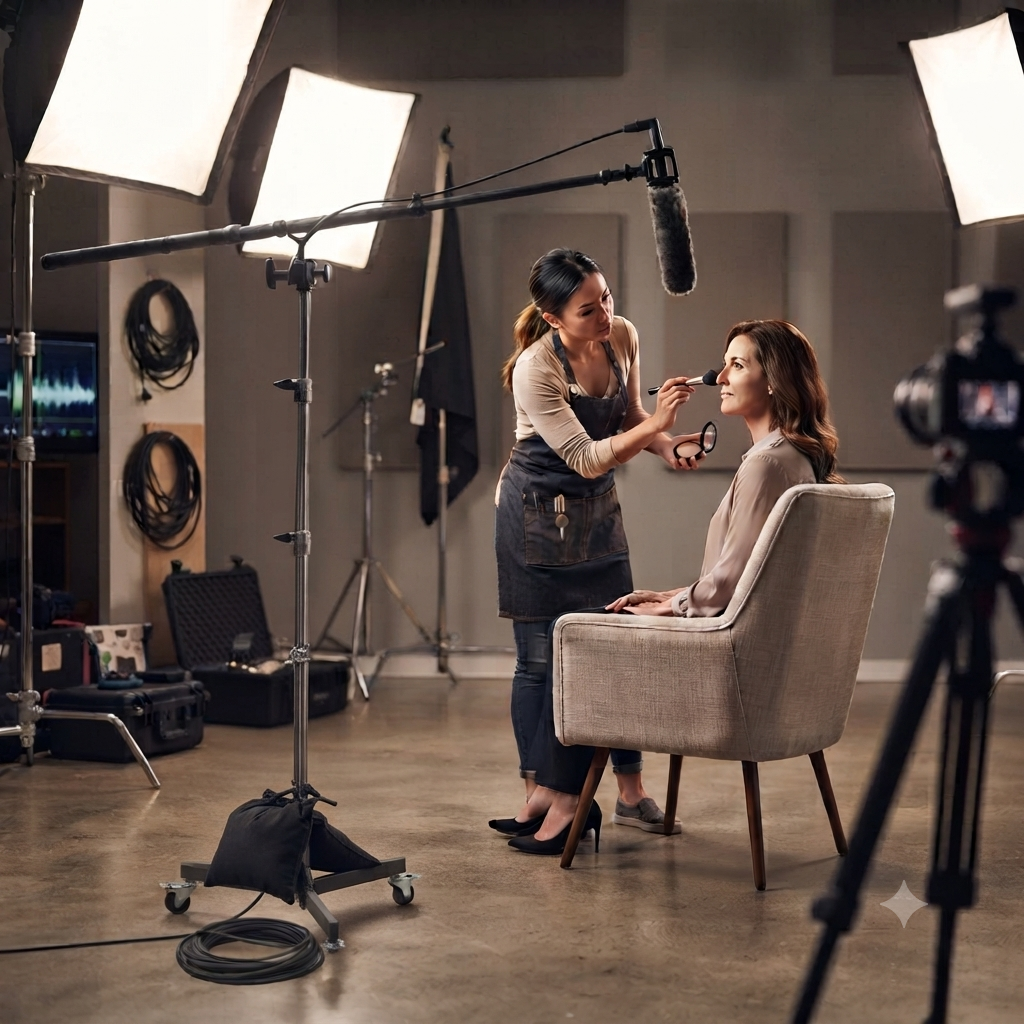
Why the Boompole Holder is Your Back’s Best Friend
In the world of filmmaking, we often obsess over the "big" gear—the 8K cinema cameras, the high-end shotgun mics, and the pristine field mixers. But if you spend any time on a set, you know that the most crucial piece of kit is often the one that doesn't get a mention in the credits: the boompole holder.
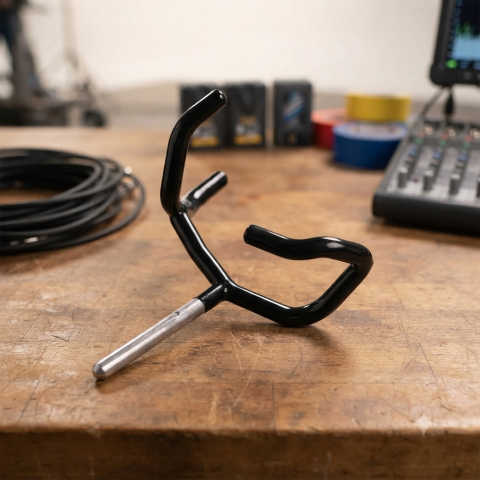
It’s humble, it’s simple, and it’s frequently overlooked. But for any sound recordist or solo filmmaker, the boompole holder is the piece of equipment that saves your career—and your spine.
What is a Boompole Holder?
At its core, a boompole holder is a mechanical clamp system that secures your pole to a C-stand, light stand, or tripod. By moving the weight of the mic from your weary arms to a sturdy stand, it transforms your setup from a "human-powered rig" into a rock-solid, repeatable audio station.
The Virtue of "Set It and Forget It"
There are moments on set where a human boom operator is indispensable—following moving talent through a house, for instance. But for the vast majority of static setups—interviews, fixed-position hosting, or stationary b-roll—a boompole holder is actually superior to a human.
Repeatability: Once you lock the angle and distance, it stays there. You don't have to worry about a tired operator’s hand drifting three inches to the left mid-take.
Precision Placement: It allows you to get the microphone closer to the subject’s mouth than a human might comfortably hold it for a 30-minute interview, drastically improving your signal-to-noise ratio.
Solo Power: If you’re a one-person crew, you aren't sacrificing audio quality for lack of a second pair of hands. You are the camera op, the lighting tech, and the sound mixer, all at once.
Saving Your Back (And Your Bacon)
Let’s be honest: boompole operation is brutal. The "H-position" or the overhead reach is a recipe for chronic shoulder, neck, and lower back issues. (Soundrolling)
When you use a holder during long sessions, you’re not just being lazy; you’re engaging in injury prevention. By offloading that weight between takes—or during the entire interview—you keep your muscles fresh. When you do need to go handheld for an action scene, you'll have the energy and stability to actually hit your marks, rather than shaking from fatigue.
As for "saving your bacon"? A professional-grade holder uses a positive-locking jaw system. This ensures that when the wind kicks up or someone bumps the stand, your thousand-dollar microphone doesn't come crashing down onto the concrete. It keeps your gear safe and your audio consistent, preventing the dreaded "we'll fix it in post" conversation.
Pro-Tips for Your Setup:
Don't Skip the Shock Mount: A holder secures the pole, but it doesn't isolate the mic from vibrations traveling through the floor or the stand. Always use a proper shock mount (like a Rycote Lyre) between the pole and the mic.
Mind the Diameter: Before buying, check the outer diameter of your boom pole. Most professional poles fall between 25mm and 32mm. Ensure your holder’s jaws can accommodate your specific pole for a secure, non-slip grip
Use a C-Stand: If you’re mounting a heavy mic, use a heavy-duty C-stand and sandbag. Your "bacon" is only as safe as the stand the holder is attached to!
Next time you’re building your kit, don't overlook the lowly boompole holder. It won't win any beauty contests, but it will be the reason you can still move your shoulders after a 12-hour day.
👉 Return to RR.COM 👈