
- Posted on
How We Prep for Your Shoot Before We Arrive
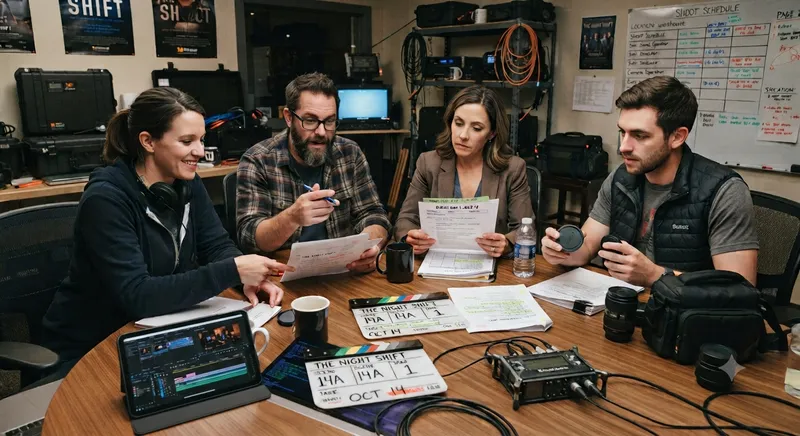
The morning of your shoot, everything's ready — locations are secured, crew is assembled, talent is in makeup. Then the camera rolls, and suddenly you're dealing with wind noise, echo, traffic, and wireless interference. All of this could have been prevented with the right preparation.
We've talked about what a location sound mixer does and why you need one on set. This week, we're pulling back the curtain on what happens before we even arrive — because professional audio isn't captured on set. It's planned, prepared, and prepared for weeks before the camera rolls.
The difference between a smooth shoot and a chaotic one often comes down to pre-production preparation. Professional location sound mixers spend significant time before a shoot scouting locations, planning equipment, coordinating with your team, and creating strategies to handle every challenge your production might face.
Here's exactly how we prep for your shoot — and what you can do to ensure your next production is set up for audio success.
The Pre-Production Timeline
Weeks Before — Planning Phase
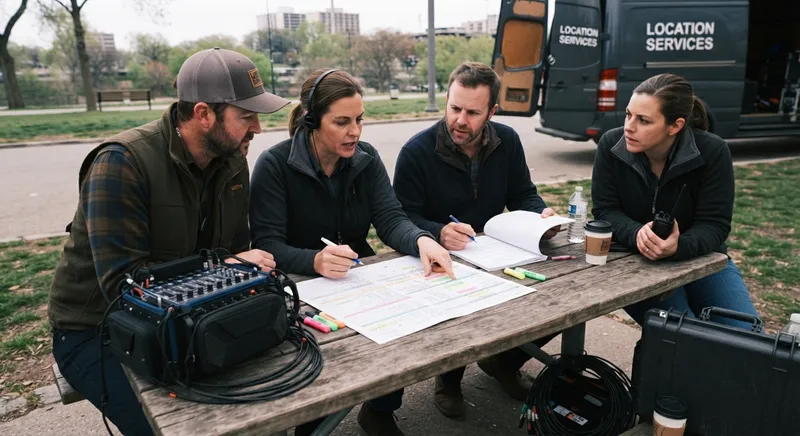
Professional audio preparation begins long before you book a location or confirm a shoot date. The planning phase is where we establish the foundation for your entire sound strategy.
We start with an initial consultation to understand your audio requirements. This means reviewing your script, shot list, and scene breakdowns to identify potential audio challenges. Is there dialogue in a noisy environment? Are you filming music performances? Do you need ambient sound for transitions? Every detail matters.
We also conduct preliminary location research and scoping. Even before visiting a space, we analyze what we can from available information — reviewing floor plans, researching neighborhood noise patterns, checking flight paths, and identifying potential acoustic challenges based on the building materials and layout.
Days Before — Preparation Phase
As the shoot approaches, preparation shifts from planning to execution. This is where we conduct detailed location scouting, either in-person or through virtual tools.
In-person visits allow us to walk through the actual space, identify every noise source, test acoustics in different areas, and map out microphone positions and wireless ranges. We document environmental challenges — traffic patterns, HVAC systems, airplane flight paths — and develop strategies to mitigate or work around them.
Equipment selection and testing also happens during this phase. We choose specific microphones for specific situations, configure recording devices, coordinate wireless frequencies, and test every piece of equipment we plan to use. Nothing gets loaded onto a truck without being verified.
Day Before — Final Prep
The day before a shoot is about verification and mental preparation. We conduct final equipment checks — testing all microphones, frequency-coordinating wireless systems, charging and labeling batteries, inspecting cables, and preparing backup systems.
We also review weather forecasts and environmental conditions. Wind protection is prepared, rain covers are packed, and backup locations are confirmed. We communicate with the production team to confirm call times, verify location access, and distribute emergency contact lists.
Perhaps most importantly, we mentally prepare for the shoot. We review all scene strategies, anticipate potential problems, plan solutions for each challenge, and visualize the workflow. When you arrive on set, we're not figuring things out — we're executing a well-rehearsed plan.
Shoot Day — Setup Phase
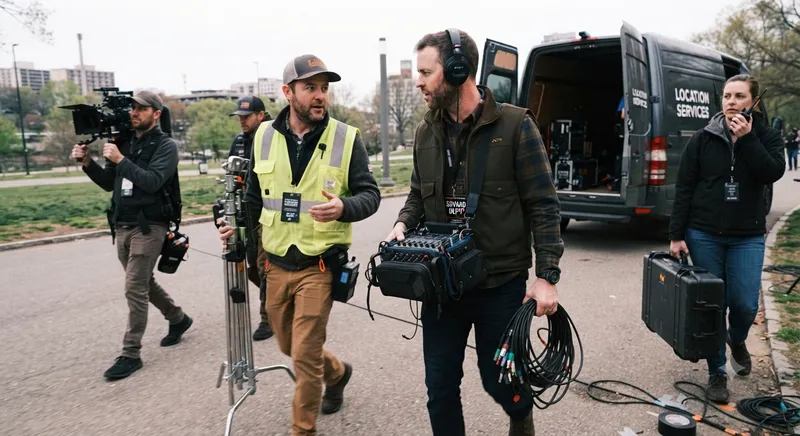
Shoot day begins with early arrival. We arrive with enough time to set up equipment, test wireless systems in the actual space, and conduct final audio checks before the camera starts rolling.
The setup phase is also when we coordinate with the camera department, director, and crew. We communicate microphone placement, discuss talent requirements, and confirm communication protocols. This coordination ensures that everyone — from camera operators to talent — understands audio priorities and how sound and visual elements work together.
💡 Professional audio preparation isn't a last-minute task — it's a structured process that begins weeks before shoot day. The more time invested in preparation, the fewer surprises on set.
Location Scouting for Audio
In-Person Location Visits
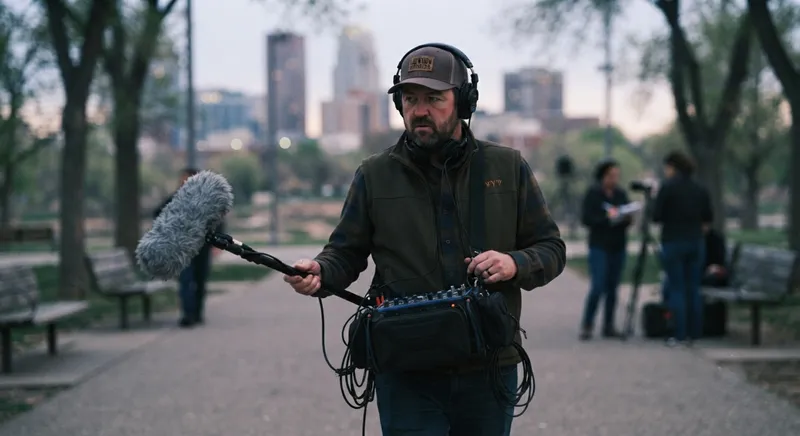
When possible, we visit locations in person to conduct thorough audio scouting. Walking through the space allows us to identify noise sources that might not be apparent from research alone.
We listen for traffic patterns, HVAC systems, mechanical noise, and environmental sounds. We test acoustics in different areas — how sound behaves in corners versus center spaces, how hard surfaces create echo, how ceiling height affects reverberation. We map out where microphones can be positioned for optimal coverage while staying out of the frame.
We also identify quiet backup areas — spaces where we can record room tone, set up wireless transmitters for testing, or move talent for dialogue if the primary location becomes too noisy. Having backup options built into our scouting strategy means we're never caught off guard.
Virtual Location Scouting
When in-person visits aren't possible, we use virtual tools to conduct comprehensive location research. Google Street View, satellite imagery, and mapping tools help us understand the surrounding environment and identify potential noise sources.
We research neighborhood noise patterns — when traffic peaks, what time construction typically occurs, whether there are nearby restaurants or bars that might be active during shooting hours. We check flight paths and air traffic patterns that could impact outdoor recordings. We review construction schedules and development plans that might introduce new noise sources.
This virtual research allows us to create detailed noise maps and develop strategies to work around or mitigate identified challenges before we arrive.
Noise Pattern Analysis
Understanding noise patterns is one of the most critical aspects of location scouting. Every environment has a unique acoustic fingerprint, and identifying those patterns is essential for planning.
Traffic noise follows predictable patterns — rush hours, weekend patterns, seasonal variations. We map these patterns and schedule shoots accordingly. If a location is near a busy road during the morning commute, we might schedule dialogue scenes for the afternoon or use directional microphones to minimize traffic capture.
Construction activity is often scheduled in advance. We research local development permits and construction timelines to avoid shooting during known noise periods. Natural sounds like wind patterns, wildlife activity, and water features also follow predictable patterns that we plan around.
Mechanical systems — HVAC, generators, elevators — run on fixed schedules. We identify these systems, understand when they're active, and plan microphone positioning or scheduling to avoid capturing their noise.
Acoustic Environment Assessment
Every location has unique acoustic properties that affect how sound behaves in the space. Understanding these properties allows us to plan microphone positioning and equipment selection accordingly.
Room size and shape dramatically impact sound. Large spaces with high ceilings create longer reverberation times, while small rooms with parallel walls can create standing waves and echo. We assess these properties and plan microphone placement to minimize problematic reflections.
Hard surfaces like concrete, glass, and tile reflect sound and create echo. Soft surfaces like carpet, curtains, and upholstered furniture absorb sound and reduce reverberation. We note these characteristics and plan strategies to work with or modify the acoustic environment.
Outdoor spaces have different acoustic challenges — wind, ambient noise, lack of natural sound barriers. We plan wind protection, microphone shielding, and positioning strategies specific to outdoor environments.
💡 Location scouting for audio isn't just about finding a quiet place — it's about understanding the acoustic environment, identifying every noise source, and planning strategies to mitigate or work around them.
Equipment Selection & Configuration
Microphone Selection by Scene
Professional audio starts with the right microphone for the right situation. Not every microphone works for every scenario, and choosing incorrectly is one of the most common mistakes productions make.
Lavalier microphones are ideal for interviews, dialogue, and situations where the talent needs mobility. They're small, discreet, and provide consistent audio regardless of camera angle. We choose specific lav models based on the clothing, movement, and audio requirements of each scene.
Shotgun microphones excel at capturing directional sound from a distance. They're perfect for boom operation in narrative scenes, environmental coverage, and situations where the talent can't be lav-miked. We select shotgun mics based on the required pickup pattern, frequency response, and mounting options.
Boom microphones provide natural, uncolored sound that closely resembles human hearing. They're ideal for dialogue scenes, music performance coverage, and situations where the most natural sound quality is required. We pair booms with appropriate shock mounts and poles based on the shooting conditions.
Specialty microphones handle specific needs — contact microphones for Foley, parabolic mics for distant sound, stereo mics for ambient capture. We select each specialty mic based on the exact requirements of the scene.
Recorder and Signal Chain Planning
The path sound takes from source to recorder is called the signal chain, and every component matters. We plan and configure the entire chain before arriving on set.
Recording device selection depends on the production requirements. For simple interviews, a portable recorder with built-in preamps may suffice. For complex multi-camera productions with multiple wireless systems, a multi-channel field recorder with dedicated preamps for each input is necessary.
Gain staging — setting the appropriate input levels — is configured based on each microphone's output and the expected audio levels. We test gain settings with the actual talent and environment to ensure clean, consistent audio without clipping or excessive noise.
Backup recording systems are planned and configured. Redundancy is essential — if the primary recorder fails, the backup must capture the same audio simultaneously. We test backup systems and verify that they're ready to go if needed.
Wireless System Preparation
Wireless microphones are essential for mobility but require careful preparation to avoid interference and dropouts. We coordinate frequencies for all wireless systems to prevent them from interfering with each other or with local TV/radio signals.
Antenna placement and range are planned based on the shooting environment. We test wireless systems in the actual location to verify coverage, identify dead zones, and optimize antenna positioning for maximum range and reliability.
Battery life is planned and managed systematically. We calculate expected battery life for each system, prepare rotation schedules, and ensure spare batteries are fully charged and easily accessible.
Interference prevention is built into every wireless system. We use frequency scanning to identify clean channels, test systems in the actual environment, and have backup frequencies ready to switch to if interference occurs.
Environmental Protection
Every piece of equipment is protected against the specific environmental challenges of your shoot. Wind protection includes dead cats, blimps, and windscreens selected based on wind conditions and microphone type.
Rain covers and weatherproofing are prepared for outdoor shoots. We test all equipment in simulated conditions before the shoot to ensure weather protection is effective.
Cable management and protection prevent damage and tripping hazards. We plan cable runs, use appropriate cables for each application, and secure all connections to prevent accidental disconnection.
Temperature considerations affect equipment performance. We plan for both hot and cold conditions, ensuring batteries perform reliably and cables remain flexible in temperature extremes.
💡 Equipment selection isn't about bringing the most gear — it's about bringing the right gear for each specific situation. Every microphone, every cable, every wireless system is chosen and configured for your production's unique needs.
Communication & Coordination
Production Meeting Participation
Professional audio preparation begins with active participation in production meetings. We attend all pre-production meetings to understand the full scope of the production, identify audio requirements, and communicate our needs to the team.
Reviewing the shot list and scene breakdowns is essential. We identify every shot's audio implications — which shots require lavalier mics, which need boom coverage, which need multiple microphones, and which can be handled with a single setup. This analysis allows us to plan equipment and personnel accordingly.
We coordinate with the camera department on microphone placement, ensuring that our audio needs are met without interfering with visual coverage. We discuss boom operator positioning, wireless pack placement, and communication protocols with the camera team.
Shot List Audio Analysis
Every shot on your shot list has audio implications, and we analyze each one to create a comprehensive audio plan.
We review each shot for microphone placement needs — where mics can be positioned, how they'll be covered, and what the coverage area will be. We identify shots that require multiple microphones, such as scenes with multiple speakers or complex staging.
We plan for camera movement and mic mobility — how microphones will follow talent as they move through the scene, how boom operators will navigate around camera equipment, and how wireless systems will maintain coverage during movement.
We address wide shots vs. close-up audio needs — understanding that wide shots may require different microphone strategies than close-ups, and planning coverage for both scenarios.
We coordinate with the director on audio priorities — understanding the creative vision for each scene and ensuring the audio plan supports that vision while maintaining technical quality.
Talent Communication
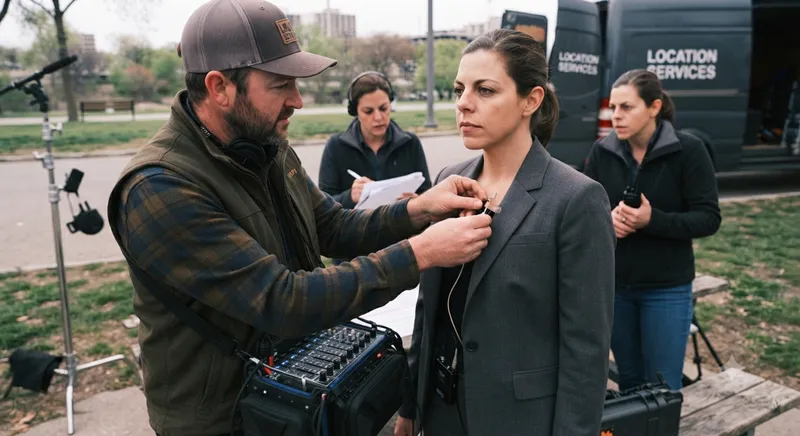
Talent communication is critical for successful audio capture. We inform actors and talent about microphone requirements well before the shoot, explaining placement, coverage, and any limitations.
We discuss lavalier placement and clothing considerations — how the mic should be positioned, how clothing affects audio quality, and how to avoid noise from movement. We explain that comfort is essential for natural performance.
We coordinate wireless pack positioning — where packs will be placed, how they'll be secured, and how they'll affect talent movement. We ensure packs are positioned for optimal coverage while maintaining comfort and discretion.
We explain movement restrictions and coverage areas — letting talent know how far they can move while maintaining audio quality and how to stay within the optimal pickup zone.
Emergency Contact & Backup Planning
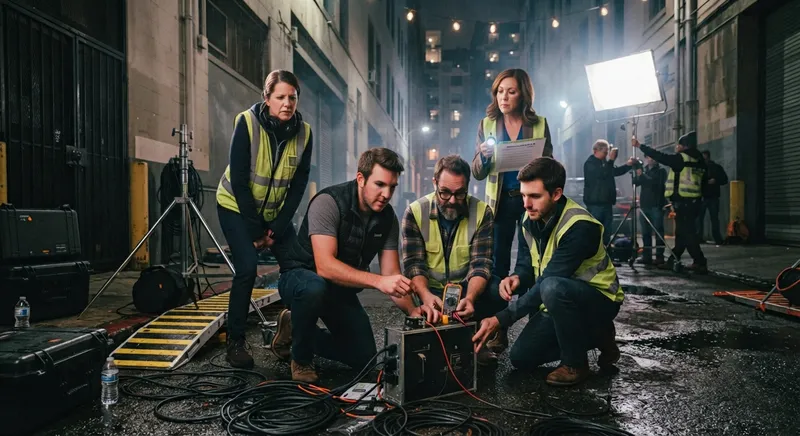 Clear communication protocols are established before the shoot. We distribute emergency contact lists to all department heads, ensuring everyone knows who to contact for audio issues.
Communication protocols include headset systems for real-time communication between the sound mixer, camera operator, and director. We test these systems and establish clear signals for audio issues and solutions.
Backup plans are created for equipment failure, weather emergencies, and location issues. We identify alternative locations, backup equipment configurations, and contingency strategies that can be implemented quickly if problems arise.
💡 Preparation isn't just technical — it's about communication. The best audio plans fail without clear coordination between the sound mixer, camera department, director, and talent.
Scene-by-Scene Audio Strategy
Interview Audio Planning
Interviews are often the backbone of documentaries, corporate content, and testimonial videos, and they require specific audio planning.
Microphone selection and placement strategy is critical. We choose lavalier mics for interviews, selecting models based on the talent's clothing, movement, and audio requirements. We plan placement for optimal proximity and minimal clothing noise.
We consider wireless vs. wired options — wireless provides mobility and discretion but requires frequency management and battery planning. Wired systems provide reliability but limit movement. We select based on the specific interview setup.
Background noise management is planned — identifying noise sources, planning microphone directionality to minimize ambient capture, and scheduling interviews during quietest hours.
Room tone capture is planned for every interview location — recording 30 seconds of silence to provide editors with clean noise profiles for post-production.
Continuity between takes is maintained by marking microphone positions, recording wireless frequencies, and documenting equipment configuration so audio remains consistent across multiple interview sessions.
Dialogue Scene Planning
Dialogue scenes require careful planning to capture natural-sounding audio while maintaining camera coverage.
Boom positioning is planned for each camera setup — where the boom can be positioned to stay out of frame while getting as close to the talent as possible. We coordinate with camera operators on boom operator movement and positioning.
Multiple microphone strategies are planned for complex scenes — lavalier mics for mobility, boom mics for natural sound, and backup systems for redundancy. We plan coverage for each speaker and ensure overlapping pickup zones.
Wireless placement is coordinated for talent movement — where packs are positioned, how cables are routed, and how coverage is maintained during movement.
Sound effects and ambience requirements are identified — whether the scene needs additional environmental sound, Foley, or specific audio elements that must be captured on location.
Action and Movement Scenes
Action scenes and movement require specialized planning to capture consistent audio while talent moves unpredictably.
Wireless system preparation is critical — selecting appropriate systems for the movement required, planning antenna coverage for large areas, and ensuring battery life for extended shooting sessions.
Boom operator coverage for moving subjects requires coordination with camera movement, talent positioning, and scene blocking. We plan boom operator positions that can follow talent while staying clear of camera shots.
Multiple microphone strategies ensure no gaps in coverage — primary mics for main dialogue, backup mics for safety, and ambient mics for environmental sound.
Power management is planned for extended shoots — battery rotation schedules, backup power sources, and monitoring systems to ensure continuous recording.
Contingency planning for unpredictable movement — anticipating where talent might go, planning microphone coverage for all areas, and having backup strategies ready if talent moves beyond planned coverage zones.
Environmental Challenges
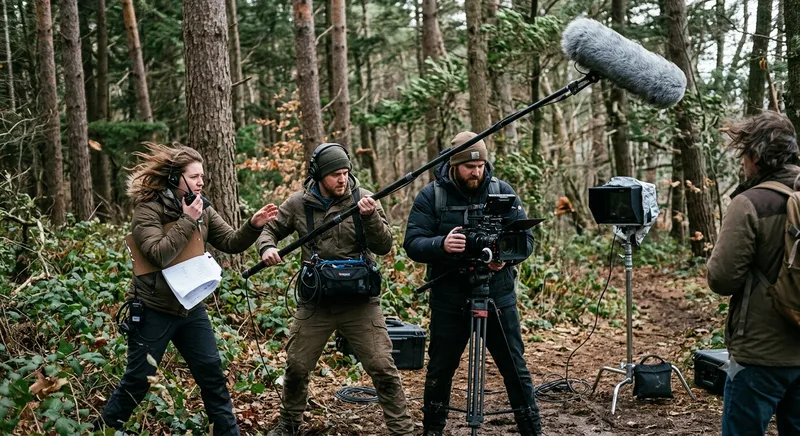 Every environment presents unique audio challenges, and we plan strategies to address them proactively.
Outdoor wind and weather planning includes selecting appropriate wind protection, positioning microphones to minimize wind impact, and monitoring conditions continuously throughout the shoot.
Indoor acoustic treatment strategies identify echo and reverberation sources and plan solutions — using portable absorption panels, positioning microphones to avoid reflections, and scheduling shoots during optimal times.
Noise mitigation for difficult locations includes identifying all noise sources, planning microphone directionality to minimize capture, scheduling around peak noise periods, and having backup locations if primary becomes unusable.
Backup plans for unpredictable conditions — weather changes, unexpected noise sources, equipment failures — are developed and ready to implement quickly.
💡 Every scene is different, and every scene needs a different audio strategy. Scene-by-scene planning ensures that no matter what your production throws at us, we're prepared to deliver professional sound.
File Management & Organization
Naming Conventions
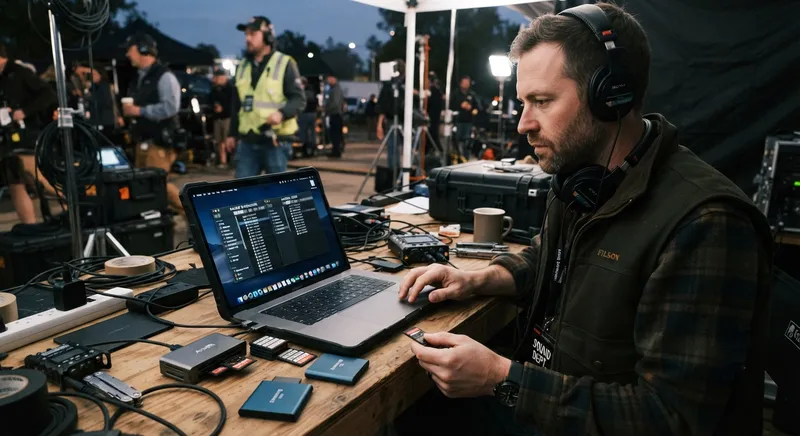
Standardized file naming is essential for efficient post-production. We develop naming conventions specific to your production that include scene numbers, take numbers, camera information, and date coding.
This system ensures that every file is immediately identifiable without needing to open it or check documentation. Editors can sort, search, and locate files quickly, saving hours of time in post-production.
Consistency across all files is maintained by following the same naming structure for every recording, every location, and every take.
Backup Systems
Redundant recording systems are planned and configured to prevent data loss. Primary and secondary recorders capture the same audio simultaneously, providing immediate backup if one system fails.
Real-time backup monitoring ensures both systems are recording correctly and that files are being saved without errors. We verify backup systems continuously throughout the shoot.
Storage capacity is calculated based on expected recording time, file formats, and quality settings to ensure adequate space for the entire shoot. Extra storage is packed as a buffer.
Documentation Preparation
Comprehensive documentation is prepared before the shoot. Audio notes templates include fields for scene information, microphone configuration, wireless frequencies, challenges encountered, and solutions implemented.
Scene-by-scene breakdown sheets document the audio plan for each scene, including microphone types, positions, coverage areas, and special requirements.
Equipment configuration logs record every setting, connection, and configuration detail so the exact setup can be replicated if needed for pickups or additional shooting days.
Wireless frequency documentation lists all frequencies used, which microphones they're assigned to, and any coordination notes for reference in post-production.
💡 Organization before the shoot saves hours in post-production. Standardized naming, redundant backup systems, and thorough documentation ensure that every recording is accounted for and easily accessible.
The Day-Before Checklist
Equipment Final Checks
The day before a shoot is dedicated to final equipment verification. Every microphone is tested and functional — checked for proper operation, cleaned, and prepared for use.
All wireless systems are frequency-coordinated and tested in the actual shooting environment to verify range and reliability. Batteries are fully charged, labeled, and organized for easy access.
Cables are inspected for damage, organized, and packed with proper protection. Backup cables are packed and verified.
Backup equipment is prepared and tested — ensuring that replacement microphones, recorders, and wireless systems are functional and ready to go.
Weather & Environment Review
Final weather forecasts are reviewed and compared against previous forecasts to identify any changes. Wind conditions are assessed, and wind protection is prepared accordingly.
Rain covers and weatherproofing are packed and verified. If outdoor shooting is planned, we monitor conditions closely and have contingency plans ready.
Indoor backup locations are confirmed — ensuring that alternative spaces are available if primary locations become unusable due to weather or other issues.
Environmental monitoring tools are packed — sound level meters, frequency analyzers, and other tools needed to assess and manage audio conditions on set.
Communication Confirmation
All production team members are contacted to confirm details. Call times are verified, location access is confirmed, and parking or setup instructions are shared.
Emergency contact lists are distributed to all department heads. Communication protocols are reviewed and confirmed.
Any last-minute changes or updates are communicated to the entire team to ensure everyone is aligned before shoot day.
Mental Preparation
The final element of day-before preparation is mental rehearsal. We review all scene strategies, anticipating problems and planning solutions.
We visualize the shoot day workflow — equipment setup, testing, recording, breaks, wrap. We mentally rehearse problem-solving scenarios and backup implementations.
We prepare for adaptability — understanding that no plan survives first contact with production, and being ready to adjust quickly while maintaining audio quality.
💡 The day before a shoot is about verification and mental preparation. Everything is tested, confirmed, and planned. When you arrive on set, you're not figuring things out — you're executing a well-rehearsed plan.
What You Can Do to Help
Share Your Production Details
The more information you share with us, the better we can prepare for your shoot. Provide your script and shot list in advance so we can analyze audio requirements for every scene.
Share location information and access details — addresses, parking, building contacts, and any restrictions that might affect equipment setup or microphone placement.
Communicate talent requirements and movement needs — how much the talent needs to move, whether they'll be wearing specific clothing that affects microphone placement, and any physical limitations that might impact audio coverage.
Discuss audio priorities with the director — understanding the creative vision for each scene allows us to tailor our audio strategy to support that vision.
Include the audio department in production meetings — this ensures that everyone is aligned on audio requirements and that sound and visual elements work together seamlessly.
Be Flexible with Scheduling
Allow time for audio preparation — rushing pre-production creates problems on set. Build in sufficient time for location scouting, equipment testing, and team coordination.
Schedule around known noise patterns — if you know a location has heavy traffic during morning rush hour, schedule dialogue scenes for the afternoon instead.
Build in contingency time — unexpected issues always arise, and having buffer time allows us to solve problems without disrupting the production schedule.
Consider time of day for location noise — some locations have predictable noise patterns that can be worked around by adjusting shoot times.
Plan for equipment setup time — arriving early and allowing adequate setup time ensures we're ready to record when the director calls action.
Trust the Process
 Communicate audio challenges openly — if you notice audio issues, tell us immediately. The sooner we identify problems, the faster we can solve them.
Allow the mixer to solve problems — we're trained to handle audio challenges quickly and efficiently. Trust our expertise and let us implement solutions.
Support microphone placement decisions — our microphone positioning is optimized for audio quality while minimizing visual impact. Support these decisions even if they require camera adjustments.
Understand that prep time saves time later — investing time in preparation prevents problems that would otherwise waste hours in post-production.
Value prevention over damage control — professional audio is about preventing problems before they occur, not fixing them after the fact.
Ready to See Our Pre-Production Process in Action?
Every production is unique, and our preparation is tailored to your specific needs. We don't use cookie-cutter plans — we analyze your script, scout your locations, plan your equipment, and create strategies for every scene.
Professional location sound isn't just equipment — it's expertise, process, and attention to detail. It's the difference between audio that's acceptable and audio that elevates your entire production.
Let us handle the audio so you can focus on the visuals. [Book a Consultation] and let's discuss your next project. Or [Request a Quote] to get pricing for your specific production needs.
Missed Post #3? Read [What Is a Location Sound Mixer and Why You Need One] to understand why audio quality matters more than you think.
What's the biggest audio challenge you've faced on set? Share in the comments below — we're all learning together.
Coming next: [On-Set Audio vs. Post-Production Sound Design] Subscribe to the "Sound Like a Pro" series so you don't miss it. Available November 7, 2026.
Have a production coming up that needs professional sound? [Contact Us] today and let's make your next project sound exactly as intended.
👉 Home 👈