
Inside Audio

Zaxcom

All posts tagged Zaxcom by Inside Audio
  • Posted on

    The Secret to Seamless Live Production: Mastering Interruptible Foldback (IFB)

    In the high-stakes world of live broadcasting, filmmaking, and professional event production, communication isn't just about talking—it’s about delivering the right information at the exact right time.

    If you’ve ever watched a live news anchor transition seamlessly from a chaotic breaking story to a calm, direct read, you’ve witnessed the power of Interruptible Foldback, or IFB.

    For those looking to level up their audio workflow, understanding and integrating a professional IFB system is the difference between a production that feels "amateur-hour" and one that runs with military precision.

    What is IFB, Actually?

    At its core, an IFB system is a one-way monitoring circuit designed for on-air talent, presenters, or remote contributors. It provides two distinct layers of audio: (Wikipedia)

    • The Program Feed: Usually a "mix-minus"—a live feed of the program audio that excludes the talent’s own voice (to prevent distracting echoes or feedback). (Grokipedia)

    • The Interrupt (Cue) Signal: The director or producer’s microphone. When they speak, the program feed is automatically "dipped" or muted, allowing the instruction to take priority in the talent’s ear.

    Why Integrate a Professional IFB Workflow?

    If you are currently relying on open-mic communication or inconsistent ad-hoc monitoring, it’s time for an upgrade. Here is why you should prioritize a dedicated IFB chain in your next project:

    • 1. Unmatched Clarity Under Pressure

    When a producer needs to tell an anchor that their segment is being cut short by 30 seconds, there is no room for ambiguity. A proper IFB system ensures that voice instructions are crisp, isolated, and prioritized over the background program feed.

    • 2. Efficiency and Confidence

    When talent can hear the show’s rhythm—and receive timely prompts—they can focus on their performance rather than worrying about timing. This reduces stress, eliminates long pauses, and creates a much more professional, fast-paced broadcast.

    • 3. Modern Flexibility

      • Wireless Reliability: High-quality RF transmission that handles complex, multi-user environments without interference. (Studio Economik)
      • Bluetooth Integration: New systems allow talent to use their own preferred Bluetooth monitoring solutions, removing the need for cumbersome cabling. (Where available)
      • App-Based Control: Remote configuration and frequency management via mobile apps mean you can scan for clean channels and manage your network from your smartphone, saving valuable setup time on set.

    Best Practices for Your Workflow

    To get the most out of your IFB integration, keep these three golden rules in mind:

    • Always Use Mix-Minus: Never send a full program mix back to your talent. If they hear their own voice with even a few milliseconds of latency, they will struggle to speak clearly. Always build a mix that excludes the talent’s microphone.

    • Prioritize Latency: In a live environment, latency is the enemy. Invest in professional-grade gear designed for low-latency transmission to ensure your cues align perfectly with the live action.

    • Test Your "Dips": Ensure your system’s auto-mute or "dip" functionality is tuned correctly. You want the program audio to drop enough so the director is clearly audible, but not so much that the talent loses the "feel" of the live show.

    The Bottom Line

    Whether you are running a local news broadcast, a corporate livestream, or a high-end film production, professional IFB is the bridge between the control room and the talent. By investing in a reliable, flexible system, you aren't just buying gear—you’re buying the insurance that your production will remain tight, responsive, and professional, no matter what happens on set.

    Are you currently using a wireless IFB system in your productions, or are you looking to upgrade from a traditional wired setup?

    👉 Return to RR.COM 👈
  • Posted on
    Maximizing the Zaxcom Nova 2

    Inside the Bag: Maximizing the Zaxcom Nova 2 and the VTX Board Upgrade

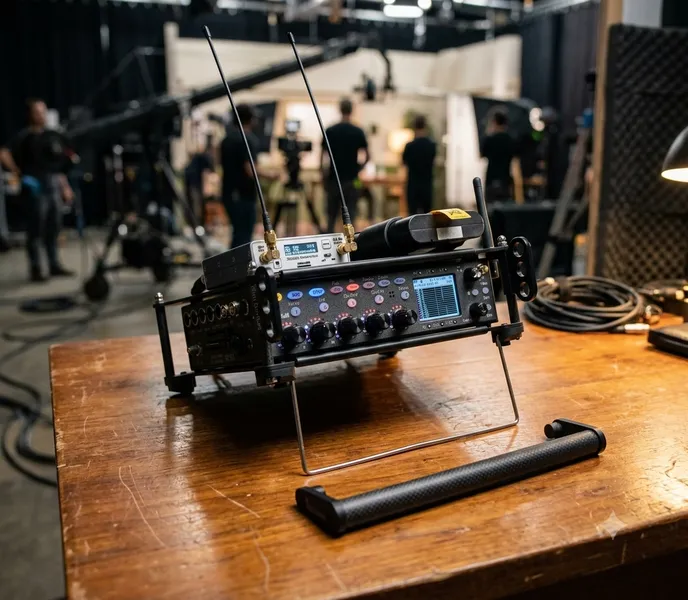
    For professional sound mixers, the relentless pursuit of reducing bag weight while expanding track counts and functionality is a balancing act. When Zaxcom dropped the original Nova, it redefined the "all-in-one" workflow by jamming a mixer, recorder, ZaxNet hub, and dual wireless receiver slots into a 3.5-pound footprint.

    The Zaxcom Nova 2 refines this formula, bringing expanded AES I/O (up to 16 digital inputs), robust processing, and those highly addictive infinity encoders. But for mixers looking to fully streamline their setup, the real conversation centers around the optional VTX internal transmitter board. (Trew Audio)

    Let’s dive into what makes the Nova 2 a production powerhouse, and whether checking the box for the optional VTX board is right for your workflow.

    The Nova 2 Foundation: What We Love Before looking at the VTX expansion, it's worth noting why the Nova 2 remains a top-tier centerpiece for bag mixers:

    • NeverClip™ Preamps: Boasting 140 dB of dynamic range on its four primary XLR inputs, it handles unexpected shouting or transient explosions flawlessly without needing brick-wall limiters. (Gotham Sound)

    • The Unmatched Slot-In Advantage: Dual slots accommodate MRX414 modules, allowing you to pull in up to 8 channels of digital wireless internally. No external audio loops, no power distribution nests, and significantly less RF loss. (Dale Pro Audio)

    • MARF II Recording: Zaxcom’s proprietary Mobile Audio Recording Format writes directly and instantly to the primary CF card. If your battery drops mid-take, your file isn't corrupted. (Trew Audio)

    Enter the VTX Board: The Ultimate Bag Consolidation? The Nova 2 is sold in two primary configurations: standard (relying on its built-in 2.4 GHz ZaxNet transmitter) and the Nova 2-V, which includes the integrated VTX VHF transmitter module.

    The VTX board is explicitly designed to transmit high-quality analog/digital IFB audio and timecode to client monitoring systems—specifically tailored to work alongside Zaxcom's VRX1 VHF receivers, as well as legacy VHF systems.

    ZAXCOM NOVA 2
    Dual Receiver Slots Optional VTX Board
    (Up to 8 ch Wireless) (Internal VHF IFB/TC Transmit)

    The Virtues: Why Mixers Love the VTX Board

    1. Zero-Footprint IFB Transmission Without the VTX board, if you want a high-power VHF feed for clients or script supervisors (like running a Comtek or external transmitter), you have to mount an external TX to your bag, wire up an audio output, and run a separate power tap. The VTX board lives completely inside the chassis, powered internally, utilizing a dedicated SMA port on the box.

    2. Radical Power and Space Savings By eliminating an external transmitter, you shave precious ounces off your bag and clean up your cabling. Furthermore, because it’s engineered directly into the Nova 2's power rail, the power consumption is incredibly efficient compared to firing up a completely separate third-party transmitter.

    3. Deep ZaxNet Integration The VTX board seamlessly coexists with ZaxNet functionality. You get a centralized hub where scanning for clean frequencies automatically places your talent transmitters into non-transmitting mode, evaluates the local spectrum, and maps out clean channels instantly. (Gotham Sound)

    The Drawbacks: Points to Consider While the VTX board sounds like a no-brainer, there are real-world trade-offs that sound mixers should weigh carefully.

    1. Ecosystem Lock-In To get the absolute most out of the VTX board’s specialized capabilities, you really want to be pairing it with Zaxcom's dedicated VHF equipment (like the VRX1). While mixers report great results jumping onto legacy analog VHF channels (like Comtek frequencies), your mileage may vary if your local client base or rental houses are firmly married to a different monitoring ecosystem.

    2. Concentration of Assets (The Single Point of Failure) When your mixer, recorder, receivers, ZaxNet hub, and IFB transmitter are all inside one single chassis, your entire sound department lives in one basket. If the unit ever needs to go back to the factory for service or a hardware repair, you aren't just losing your recorder—you are losing your entire wireless and client-monitoring infrastructure.

    3. Field Serviceability vs. Factory Upgrades The Nova 2 is vastly improved in terms of field serviceability (the memory card interface and standard IFB antennas are modular). However, if you buy the base Nova 2 model and decide you want the VTX board down the line, it requires sending the machine back for a factory upgrade, rather than being a simple user-swappable drop-in slot. (Trew Audio)

    The Verdict If you are a location sound mixer who thrives on a lightweight "run-and-gun" reality bag, a commercial setup, or fast-moving indie features, the Nova 2 with the VTX board is arguably the neatest audio package available. It completely removes the "bag acne" of Velcroed transmitters and cable nests.

    However, if your workflow requires throwing an IFB transmitter high up on a master antenna mast away from your body, or if you regularly interface with crews providing their own non-VHF monitoring setups, sticking with the base Nova 2 and utilizing external AES/analog routing might give you the modular flexibility you need.

    Are you considering updating your current bag architecture to an all-in-one system, or are you looking to integrate the Nova 2 into an existing cart-based workflow?