- Posted on
Stop the Sync Struggle: A Look at Affordable Timecode Generators
Timecode generators have moved from being expensive, specialized gear to accessible tools that are essential for any multi-cam or professional sound workflow.
If you’ve ever spent hours in post-production manually aligning waveforms or clicking through clapperboard claps, you know the frustration. The solution? Timecode.
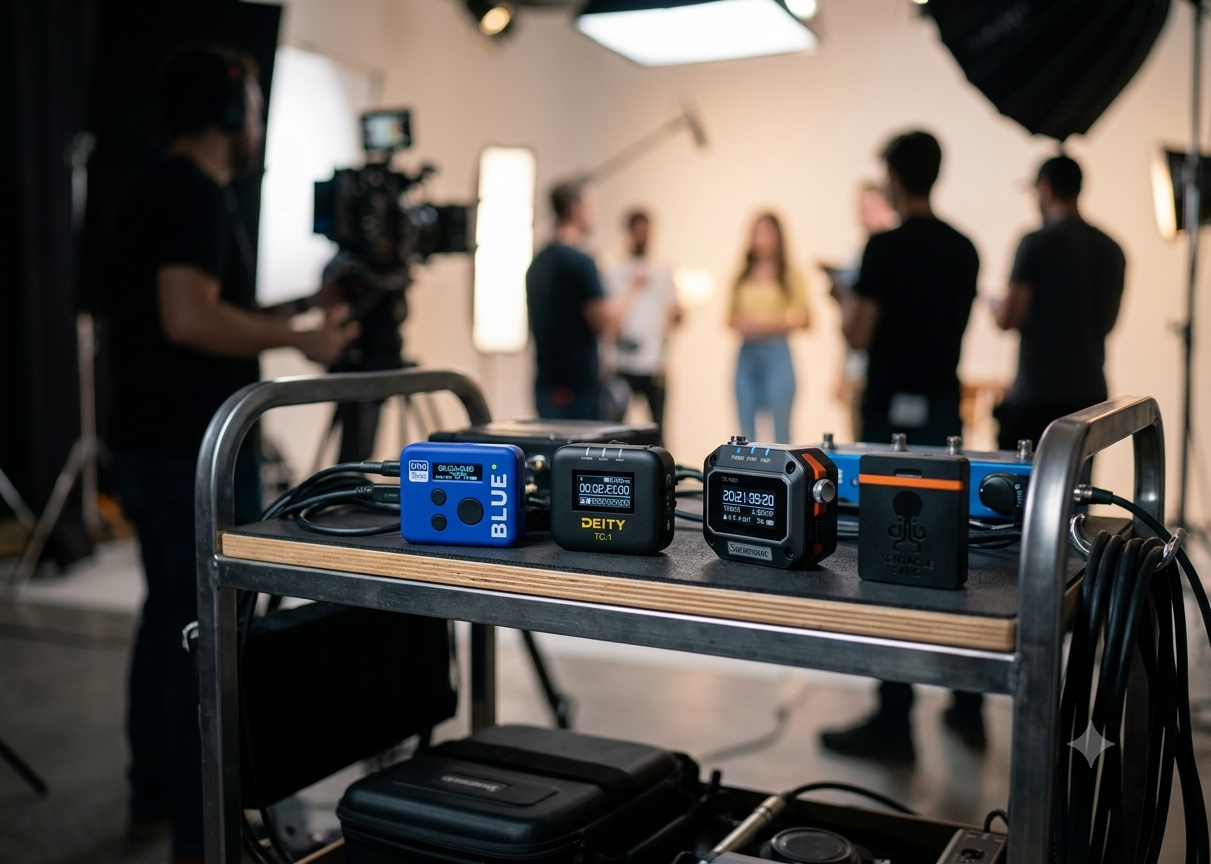
For years, pro-level timecode sync was a major investment. Today, it’s within reach for the indie filmmaker. We’re comparing four popular, budget-friendly options that will change your editing workflow forever: Deity TC-1, Tentacle Sync E mkII, Atomos UltraSync BLUE, and the Saramonic TC-NEO.
At a Glance: Quick Comparison
| Feature | Deity TC-1 | Tentacle Sync E mkII | Atomos UltraSync BLUE | Saramonic TC-NEO |
|---|---|---|---|---|
| Best For | Ecosystem Users | Reliability & Simplicity | Wireless/Mobile Setup | Value & Flexibility |
| Sync Method | RF (2.4G) & Bluetooth | Bluetooth | Bluetooth | RF (2.4G) & Bluetooth |
| Display | OLED Screen | None (App-driven) | OLED Screen | OLED Screen |
| Drift | <1 frame/72hrs | <1 frame/24hrs | <1 frame/24hrs | <1 frame/48hrs |
| Battery Life | Up to 28 hours | Up to 50 hours | Up to 20 hours | N/A |
1. Deity TC-1: The Feature-Packed Powerhouse
The Deity TC-1 has become a massive favorite because it bridges the gap between pro features and ease of use. It features a built-in OLED screen, allowing you to verify sync status at a glance without needing your phone. Its proprietary RF sync is incredibly reliable, and the Sidus Audio app makes managing a large fleet of units straightforward. (Deity Microphones)
- Pros: On-device screen, excellent range, robust build, and an expanding ecosystem (including their smart slate).
- Cons: Slightly larger footprint than the competition. Fiddly wheel and tiny icons are problematic.
2. Tentacle Sync E mkII: The Industry Standard
If you talk to professional sound mixers, many will point you to the Tentacles. They are the company that arguably made "budget" timecode popular. They are incredibly small, light, and reliable. While they lack an onboard screen (you manage everything via the app), they are known for their "set it and forget it" reliability and top-tier customer support. (Tentacle Sync)
- Pros: Proven reliability, industry-standard software, and extremely compact.
- Cons: No screen on the device; you must rely on the app to check settings.
3. Atomos UltraSync BLUE: The Wireless Specialist
The UltraSync BLUE is a different animal. It is designed specifically for a wireless workflow, syncing timecode over Bluetooth to compatible cameras, audio recorders, and apps. It’s perfect for creators using smartphones, mirrorless cameras, or Atomos-enabled gear who want to get rid of cables entirely. (Atmos)
- Pros: Lightweight, cable-free operation, integrates seamlessly into the broader Atomos ecosystem.
- Cons: Limited to Bluetooth-compatible devices for wireless sync; you lose some of the "universal" flexibility of hardwired boxes.
4. Saramonic TC-NEO: The Value Contender
The newcomer in this group, the TC-NEO is making waves by packing professional features into an aggressive price point. With a solid OLED screen, a rugged design, and a wide array of frame-rate support, it is built to compete directly with the bigger names. It's an excellent choice if you want the "pro" experience without the premium price tag.
- Pros: Great value, includes multiple cable types, and features a handy onboard screen.
- Cons: Being a newer player, it lacks the decades of "battle-tested" reputation that Tentacle carries.
The Verdict: Which one should you pick?
Go with the Deity TC-1 if you want an all-around reliable unit with a screen that plays well with other gear (like slates).
Choose the Tentacle Sync E mkII if you value a proven, "it just works" system that is small enough to hide on any camera rig.
Pick the Atomos UltraSync BLUE if your workflow is mostly Bluetooth-based and you want to avoid cables at all costs.
Grab the Saramonic TC-NEO if you are on a tighter budget but still want the convenience of an onboard display and a robust feature set.
Final Tip: No matter which you choose, the best timecode generator is the one that gets used. Once you start recording locked timecode, you’ll never want to go back to the "clapper-and-waveform" dance in post-production.
👉 Return to RR.COM 👈