
- Posted on
- • Mixers
Deity PR-4 vs. Sound Devices MixPre-3 II
- Author
-
-

- User
- Rusty Rogers
- Posts by this author
- Posts by this author
-
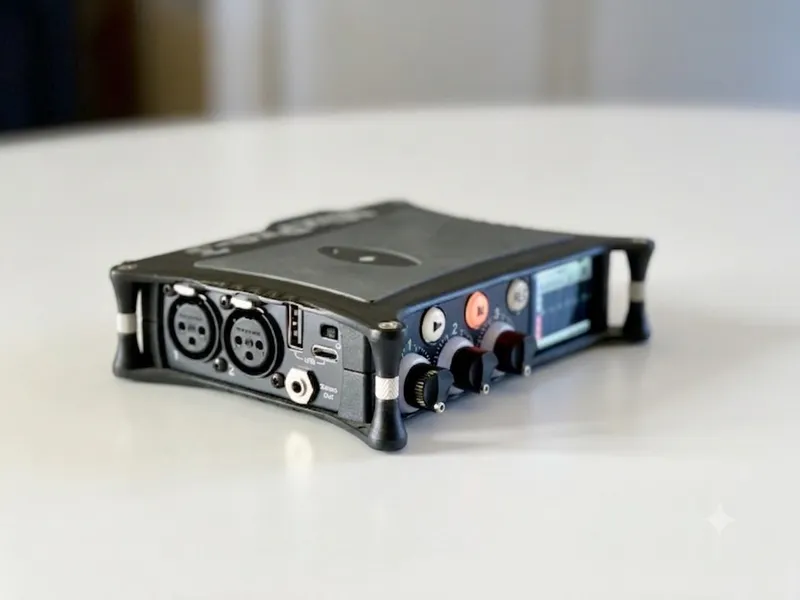
Battle of the Ultralights: Deity PR-4 vs. Sound Devices MixPre-3 II
For years, if you wanted professional, "never-clip" 32-bit float audio in a compact package, the industry answer was automatic: get a Sound Devices MixPre-3 II. It’s been the gold standard for run-and-gun filmmakers, podcasters, and sound designers alike.
But Deity has shaken things up with the PR-4, a six-track field recorder specifically built to challenge that undisputed crown
If you’re trying to decide between the classic titan and the new challenger, the choice actually comes down to your physical rigging and your wireless workflow. Here is how they stack up.
The Quick Verdict: Which Should You Buy?
Choose the Deity PR-4 if: You run a solo or small-crew video rig, use wireless lavaliers alongside a boom, rely on app-based control, and want an all-in-one wireless timecode ecosystem without buying extra hardware boxes.
Choose the Sound Devices MixPre-3 II if: You require the absolute lowest noise floor for whisper-quiet environments (like nature recording), want full-sized physical gain knobs, and need three dedicated XLR inputs rather than combo/3.5mm compromises.
The Tail of the Tape: Spec Comparison
| Feature | Deity PR-4 | Sound Devices MixPre-3 II |
|---|---|---|
| Max Tracks | 6 tracks (4 ISOs + Stereo Mix) | 5 tracks (3 ISOs + Stereo Mix) |
| Physical Inputs | 2x XLR/TRS Combo, 1x Stereo 3.5mm | 3x XLR |
| Preamps / Gain | ReGain Preamps (+60 dB) | Kashmir Preamps (+76 dB) |
| Max Resolution | 32-bit Float / 192 kHz | 32-bit Float / 192 kHz |
| Storage Backup | Dual: SD Card + Internal 64GB SSD | Single: SD Card only |
| Remote Control | Sidus Audio App (Bluetooth) | Wingman App (Bluetooth) |
| Timecode | Wired I/O + Native Wireless Sync | Wired I/O (BNC / Aux In) |
| Power Options | Sony NP-F550, USB-C PD, 4-pin Hirose | AA sled, Sony L-Mount sled, USB-C |
| Price | ~$449 | ~$895 |
3 Critical Differences You Need to Know
1. The Inputs: 3 XLRs vs. "The Hybrid 4" The MixPre-3 II features three pristine, full-sized XLR inputs powered by legendary Kashmir preamps. They offer an incredible +76 dB of gain, making them capable of driving notoriously "gain-hungry" dynamic mics (like the Shure SM7B) completely clean.
The Deity PR-4 offers four inputs, but they are split up: two XLR/TRS combo jacks and a stereo 3.5mm jack for channels 3 and 4 (B&H)
- Why this matters: If you're hosting a 3-person podcast with XLR mics, the MixPre wins. But if you’re a videographer running a boom mic on XLR and a dual-channel wireless receiver (like a DJI Mic 2 or Rode Wireless PRO) via 3.5mm, the PR-4 gives you four clean tracks without needing messy adapters. (CVP)
2. Timecode & The Wireless Ecosystem Both recorders handle standard wired timecode perfectly. However, the Deity PR-4 pulls ahead for solo shooters by acting as a wireless timecode master hub. Out of the box, it can natively sync timecode over the air to Deity's TC-1 boxes or TC-SL1 smart slates. If your cameras are outfitted with Deity gear, syncing your entire set takes seconds from the Sidus Audio phone app. To get wireless timecode on the MixPre, you have to buy a third-party add-on like a Timecode Systems Bluetooth module. (Sound on Sound)
3. Redundancy: The "Forgot My SD Card" Lifesaver If you’ve ever formatted a card on set by accident, this feature will resonate with you. The MixPre-3 II records strictly to a single SD card. The Deity PR-4 introduces dual-media recording: it writes your tracks to an SD card and a built-in 64GB internal SSD simultaneously. If your card fails, or if you simply leave it sitting in your computer's card reader at home, the PR-4 still saves your shoot. (Deity Microphones)
The Usability Factor The MixPre-3 II features beautiful, tactile physical knobs on the front for dialing in your headphone levels or mixes on the fly. The PR-4 relies heavily on its AMOLED touchscreen interface and smartphone app. If you hate digging through digital menus in the field, the MixPre's analog layout remains unmatched.
Summary The Sound Devices MixPre-3 II remains an absolute boutique audio powerhouse with unmatched preamps, stellar build quality, and a premium price tag to match.
However, at roughly half the price, the Deity PR-4 isn't trying to beat Sound Devices at the acoustic engineering game—it's trying to out-smart it. By packaging an internal SSD backup, 4-input camera-bag friendly routing, and built-in wireless timecode into a tiny footprint, it's easily the more practical tool for the modern independent videographer.
Which of these features matters most to your setup—preamp power or built-in backup?