
- Posted on
- • Microphones
Head-to-Head: Sanken CS-M1 vs. Sennheiser MKH50
- Author
-
-

- User
- Rusty Rogers
- Posts by this author
- Posts by this author
-
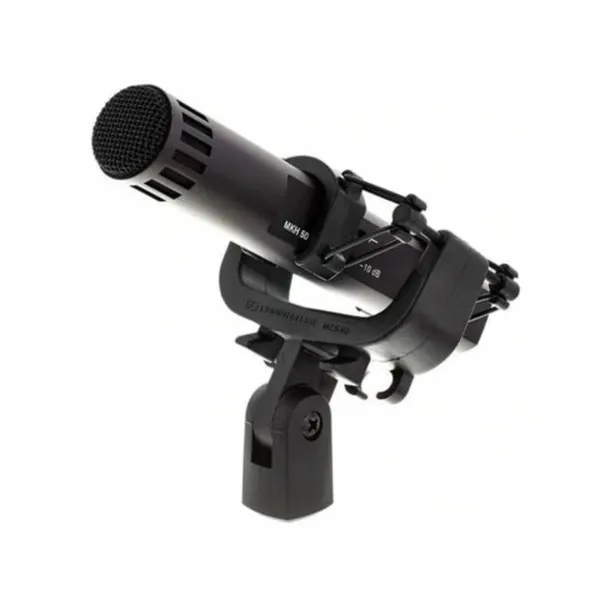
Head-to-Head: Sanken CS-M1 vs. Sennheiser MKH50
If you're looking for an elite indoor dialogue microphone, the Sennheiser MKH50 is almost certainly on your radar. It has been an industry-standard "go-to" for Hollywood sound mixers for decades.
So how does the upstart Sanken CS-M1 compare to the reigning king of indoor boom audio?
| Feature | Sanken CS-M1 | Sennheiser MKH50 |
|---|---|---|
| Microphone Type | Short Interference Tube Shotgun | True Small-Diaphragm Condenser (RF) |
| Polar Pattern | Supercardioid / Lobar | Supercardioid |
| Length | 4.1 in (103 mm) | 5.9 in (150 mm) |
| Weight | 1.9 oz (55 g) | 3.88 oz (110 g) |
| Frequency Range | 70Hz – 20kHz | 40Hz – 20kHz |
| Self-Noise | 16 dB-A | 12 dB-A |
| On-Board Controls | None (Clean body) | Low-cut filter & -10dB pad switches |
| Price Point | ~$675 | ~$1,490 |
The Sonic Showdown The Sennheiser MKH50 is legendary for its rich, warm tone and massive low-end. It makes voices sound "larger than life" right out of the box, which is why it is so beloved for narrative films. Because it doesn't use an interference tube, it handles worst-case indoor reflections with absolute grace.
The Sanken CS-M1, by contrast, favors punchy realism. It rolls off the low end sooner (around 70Hz compared to the MKH50's deep 40Hz), meaning it actually sounds cleaner in rooms with heavy background rumble. It trades a bit of that heavy Sennheiser "warmth" for incredible speech articulation and presence.
Where the Sanken Wins
The Travel Factor: The CS-M1 is nearly half the weight and length of the MKH50. If you are mounting a mic onto a gimbal-mounted cinema camera or carrying gear in a backpack, the Sanken wins by a landslide.
Outdoor Versatility: Because the CS-M1 is technically a short shotgun, it retains a tighter, more focused "reach" outdoors than the MKH50, which is strictly designed as an indoor/spot microphone.
The Budget: At roughly half the price of the Sennheiser, you can almost buy two CS-M1s for the cost of one MKH50.
Where the Sennheiser Wins
Ultimate Quietness: With a self-noise floor of just 12 dB-A, the MKH50 is noticeably quieter in pristine, soundproofed studio environments.
On-Board Customization: The MKH50 features a physical -10dB pad for handling explosive sound sources and a low-cut switch right on the mic body, giving you hardware-level control before the signal ever hits your mixer.